
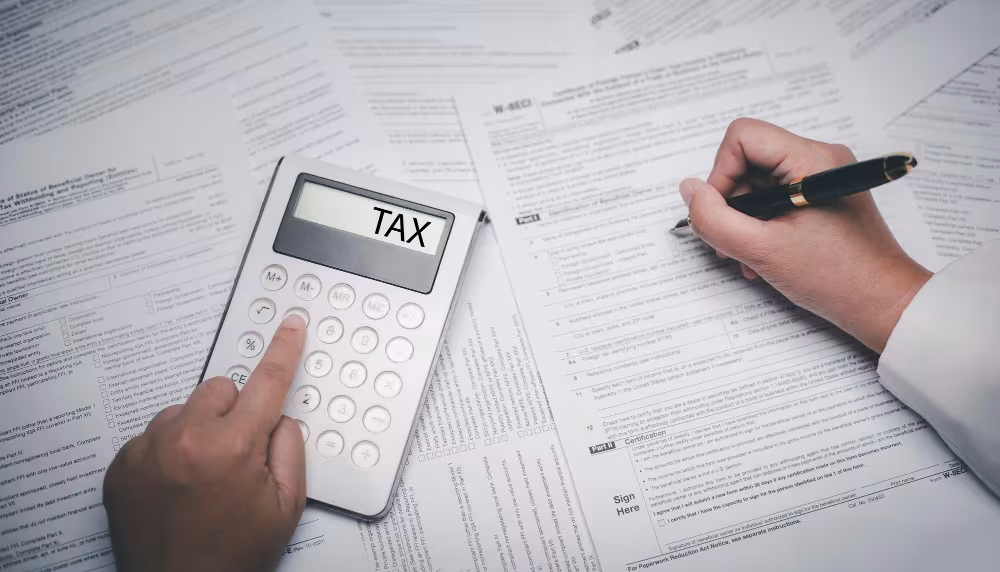
Receiving an IRS Notice CP11 can feel confusing at first because it usually shows up after you thought your tax return was already settled. This notice simply means the IRS reviewed your return and made adjustments that changed the amount you owe. Sometimes the difference comes from small calculation issues, while other times it involves credits, payments, or income mismatches.
Before you assume the IRS is right or rush to pay the balance, it’s important to understand why the change happened and what your options are.
What Is an IRS Notice CP11?
IRS Notice CP11 is basically an official letter the IRS sends after it’s gone over your tax return and made some changes because it found something it thinks is off. The notice lets you know that your tax amount is no longer what you originally thought, that you now owe more money, plus any interest that’s built up, and that you either need to pay what’s shown or respond by the deadline they’ve given you.
Why Did You Receive a CP11 Notice From the IRS?
If you’re sitting there with a CP11 notice in your hand and you’re not sure what to make of it, this part can help you feel a bit more in control. Knowing the common reasons the IRS sends CP11 makes it easier to figure out whether the notice is about a small paperwork fix or something that really needs your attention right away.
Math or calculation errors on your tax return
You might get a CP11 notice simply because the IRS found what it sees as a math or calculation error on your return. This could be something like adding numbers wrong, entering an amount in the wrong spot, or miscalculating a credit or deduction. The IRS uses automated systems to check returns, and when it spots one of these small mistakes, it corrects it and sends you a CP11 to let you know.
IRS corrections to credits or deductions
Another reason you could receive CP11 is that the IRS changed or removed a credit or deduction you claimed. This usually happens if the IRS thinks you didn’t qualify, claimed too much, or didn’t meet the income limits, or if your deduction doesn’t line up with what they see on third‑party forms like W‑2s or 1099s. In those cases, the IRS updates your return and sends CP11 to explain the change and the new balance.
Changes made after the automated IRS review
Many CP11 notices come from the IRS’s automated review process, where computers compare your return with data from employers, banks, and other payers. If the system spots a mismatch or error and decides it creates a balance of about $5 or more, it automatically adjusts your return and issues CP11 without opening a full audit. That’s why CP11 often feels like a quiet correction rather than a big IRS investigation.
What Happens If You Ignore an IRS Notice CP11?
If you’ve gotten a CP11 notice and you’re thinking about just setting it aside, it helps to know how that choice can play out in the real world. This is the kind of situation where a small delay or inaction can quietly turn into something more serious over time, so it’s worth seeing what usually happens when people don’t respond or pay.
Accruing penalties and interest
If you get a CP11 notice and you just leave it sitting there without doing anything, the amount you owe doesn’t stay the same. The IRS will keep adding interest to whatever balance is still unpaid, and on top of that, it can also add penalties like the failure‑to‑pay penalty. Over time, that can turn what started as a smaller amount into something much bigger than you originally thought it would be.
Risk of further IRS collection notices
When you don’t respond or pay what’s shown on CP11, the IRS usually moves your account into its regular collection process. That often means you’ll start getting more follow‑up letters, like CP501, CP503, or CP504, which are stronger reminders that the balance is still due. These notices are basically the IRS letting you know they’re not going to stop following up until the issue is taken care of.
Possible escalation to liens, levies, or wage garnishment
If the CP11 balance is left unpaid for too long and you haven’t worked something out, the IRS can take stronger steps to collect what you owe. That could include putting a tax lien on your property, taking money directly from your bank account through a levy, or having part of your paycheck taken out through wage garnishment. These actions are meant to collect the debt when other options haven’t worked, which is why it really helps to deal with CP11 as soon as you get it instead of waiting and hoping it will go away.
How to Respond to a CP11 Notice IRS Sent You?
Getting this notice doesn’t automatically mean trouble, but how you handle it can make a real difference in how quickly things get resolved and whether it turns into a bigger headache than it needs to be.
When the IRS calculation is correct
If you take a look at your CP11 notice and realize that, yes, the IRS calculation is actually correct, the next thing to do is just take care of the balance. It’s not complicated, but you do want to handle it on time.
- Pay the amount shown by the due date on the notice.
- Set up a payment plan if paying the full amount all at once isn’t an option.
- The IRS makes it pretty easy with several electronic payment options on its Payments page.
- And if you find yourself needing a bit more time, you can always apply for an installment agreement using the Online Payment Agreement tool.
In the meantime, go ahead and update the copy of your tax return that you keep for your records. Don’t worry, you don’t need to send this corrected copy back to the IRS.
When you disagree with the CP11 notice
Now, if something doesn’t seem right and you don’t agree with the changes, don’t panic. You do have the right to challenge the notice, but you’ll want to act within the timeframe mentioned, which is usually around 60 days from the date on the letter.
Here are a few ways you can handle it:
Call the IRS using the phone number on the notice. Honestly, this is often the quickest way to sort out mistakes, and in some cases, they can fix things over the phone right away.
If you’d rather respond by mail, here’s what to do:
- Include a copy of the notice along with any supporting documents or explanations.
- Give the IRS a little time, usually 30 to 60 days or sometimes a bit longer, to review everything and get back to you.
How a Tax Professional Can Help With IRS Notice CP11
When you receive IRS Notice CP11, you are not just looking at a balance change. You are looking at a decision point. You can accept the adjustment, question it, or explore payment options. Each choice carries consequences, and the details matter.
A tax professional brings clarity to that moment. Instead of guessing why the IRS made changes, you get a careful review of your return, your records, and the notice itself. That review can uncover reporting gaps, credit adjustments, or payment differences that may not be obvious at first glance.
A professional also understands how the IRS reviews adjustments and what kind of response tends to move the process forward. When payment is required, guidance can help you choose an option that fits your financial situation rather than creating more pressure.
Next Steps If You Received a CP11 IRS Notice
After reviewing the notice and your return, you may realize that you want experienced guidance before taking action. That is where Mr. Michael Sullivan can assist you.
He is a former IRS agent who works closely with CPAs, MBAs, tax attorneys, and enrolled agents. His background inside the IRS gives him direct knowledge of how adjustments like CP11 are reviewed and processed. That perspective helps clients understand what the IRS is looking for and how to present information clearly.
Getting help before you respond can give you clarity and confidence in a decision that affects your finances.
Reach out today!
FAQs
An IRS Notice CP11 is basically the letter the IRS sends when it spots a math or clerical issue while going through your tax return. It means they’ve gone ahead and adjusted something on their end, and as a result, you now owe a bit more than what you originally reported. Along with that, the notice lays out what was changed, how much is due, including any interest or penalties that may have added up, and the deadline you’re working with to either pay or respond.
No, a CP11 is not an audit. It’s a notice that the IRS made a math error adjustment using information it already has on file. If you disagree with the changes and can’t back up your side with the right documents, the IRS might send your case to the Examination department for a formal audit, but the CP11 itself is not an audit.
Most of the time, you have around 60 days from the date on the notice to respond if you don’t agree with the changes. If everything looks accurate and you’re fine with the adjustment, paying the amount listed by the due date is the best move. Taking care of it promptly helps stop additional interest and penalties from continuing to build.
Well, yes, you can dispute a CP11 notice from the IRS if you believe the IRS got it wrong. And you can do that in essentially two ways:
By phone: Talking to the toll-free phone number listed on the top right of the notice is usually the fastest option to discuss the issue.
By Mail: Write an explanation in writing, along with any other necessary documents, to the address indicated on the notice, allowing the IRS time to review your correspondence.
If a CP11 notice is left unanswered and no payment is made within the 60-day window, the issue usually doesn’t just fade away. Instead, a few things can start happening behind the scenes, and none of them are especially helpful.
You may lose the right to challenge the IRS’s decision in U.S. Tax Court without paying the tax first.
Interest and late-payment penalties will continue to add up on the unpaid balance over time.
If the balance remains unresolved, the IRS can move forward with collection actions, such as filing a lien, garnishing wages, or levying money from your bank account.